Book your Tokyo–Kyoto Shinkansen seats point-to-point on Smart EX before you fly — about ¥14,170 (≈₹8,360) per person — but do two things in your banking app first: switch international transactions ON, and confirm your card is enrolled in 3D Secure. That card setup, not the booking form, is where Indian travellers actually get stuck. Smart EX takes Visa, Mastercard, Amex, JCB, Diners Club and Discover issued overseas; what it will not take is a card your bank still has locked to domestic use, which is the default state of most Indian cards.
If you and your partner are booking a Japan trip this week, that is the whole job: fix the card tonight, book the seats at 10:00 JST one month before travel, and travel on a QR code or a tapped IC card. Everything below is the detail.
Tip: Doing this in the first half of August 2026? Every Nozomi runs all-reserved from 7–16 August for Obon — there is no non-reserved carriage to fall back into. Book before you fly or you will be standing.
(All ₹ figures use ¥1 ≈ ₹0.59, the rate in early August 2026. Yen fares are set by JR and are stable; ₹ equivalents are approximate and move with the exchange rate.)
First: fix your card, tonight, from India
This is the India-specific step. Guides written for American or British travellers skip it entirely, because their cards ship ready for international online payments. Yours almost certainly did not.
1. Switch on international transactions
Since March 2020, the RBI has required Indian banks to issue and reissue every card — debit and credit, physical and virtual — enabled only for domestic use at ATMs and card machines in India. International and online use is off until you switch it on. Banks must offer that switch 24×7 through the mobile app, net banking, IVR or a branch.
In practice: open your bank's app → Cards → Manage / Card Controls → enable International and Online / e-commerce usage, and set a transaction limit high enough for the fare (₹50,000 covers a couple's return legs comfortably). HDFC, ICICI, SBI, Axis and Kotak all expose this in the app; some reset it after a card reissue, so check even if you switched it on for a previous trip.
2. Confirm 3D Secure enrolment
Smart EX runs every payment through 3D Secure 2.0 — the OTP/bank-approval step. It is the single most common reason a foreign card fails on Japanese rail sites. Visa, Mastercard, JCB, American Express, Diners Club and UnionPay all support 3D Secure, but only if your issuing bank has enrolled the card, and enrolment can lapse when a card is renewed or reissued.
The cheap test: make any small international online payment before you leave India. If the OTP screen appears and the charge goes through, you are enrolled. If it fails silently, call the number on the back of the card and ask them to enable 3D Secure for international e-commerce.
Tip: There is no card brand that works better here. An older version of this advice claimed American Express had a higher success rate on Smart EX — it does not. Smart EX lists Visa, Mastercard, JCB, Amex, Diners Club and Discover as accepted from overseas. The gate is your bank's settings, not the logo on the card.
Which site books which line
Japan does not have one national booking site. Which platform you use depends on which direction you are travelling, and for the classic Tokyo–Kyoto–Osaka trip the answer is always Smart EX.
Platform | Covers | Use it for |
|---|---|---|
Smart EX | Tokaido, Sanyo, Kyushu Shinkansen | Tokyo–Nagoya–Kyoto–Shin-Osaka–Hiroshima–Hakata |
JR-EAST Train Reservation (eki-net) | Tohoku, Hokkaido, Joetsu, Hokuriku, Yamagata, Akita | Sendai, Aomori, Sapporo, Kanazawa, Niigata |
Klook | Resells Tokaido/Sanyo seats | Backup if a JR site refuses your card |
Two things worth knowing. Smart EX registration accepts an overseas address — you do not need a Japanese address or phone number. That requirement was dropped in 2023, but the older advice is still circulating and puts people off before they start. And eki-net has a worse record with foreign cards than Smart EX does; JR East's own advice when a card is declined is to buy at a station instead. If your trip includes both a Kyoto leg and a Kanazawa or Sendai leg, expect to use two sites.
On Klook: it is worth checking, and not for the reason you would guess. Klook is an official JR partner and sells at roughly the official fare — it does not mark the ticket up, and it occasionally runs a small promotional discount. Its real value to an Indian traveller is that it is a different payment rail, so a card that Smart EX bounces sometimes clears there.
Booking Tokyo → Kyoto on Smart EX, step by step
One concrete leg, start to finish. This is the one you will actually book.
Register at smart-ex.jp (choose the English site). You will need a name exactly as it appears on your passport, an email address, and the card from the previous section. Do this from India, days before you need to book — registration and booking are separate steps and you do not want to discover a card problem at 06:30 IST on release morning.
Search Tokyo → Kyoto for your date. You will see Nozomi (2 h 15 m), Hikari (about 2 h 45 m) and Kodama services.
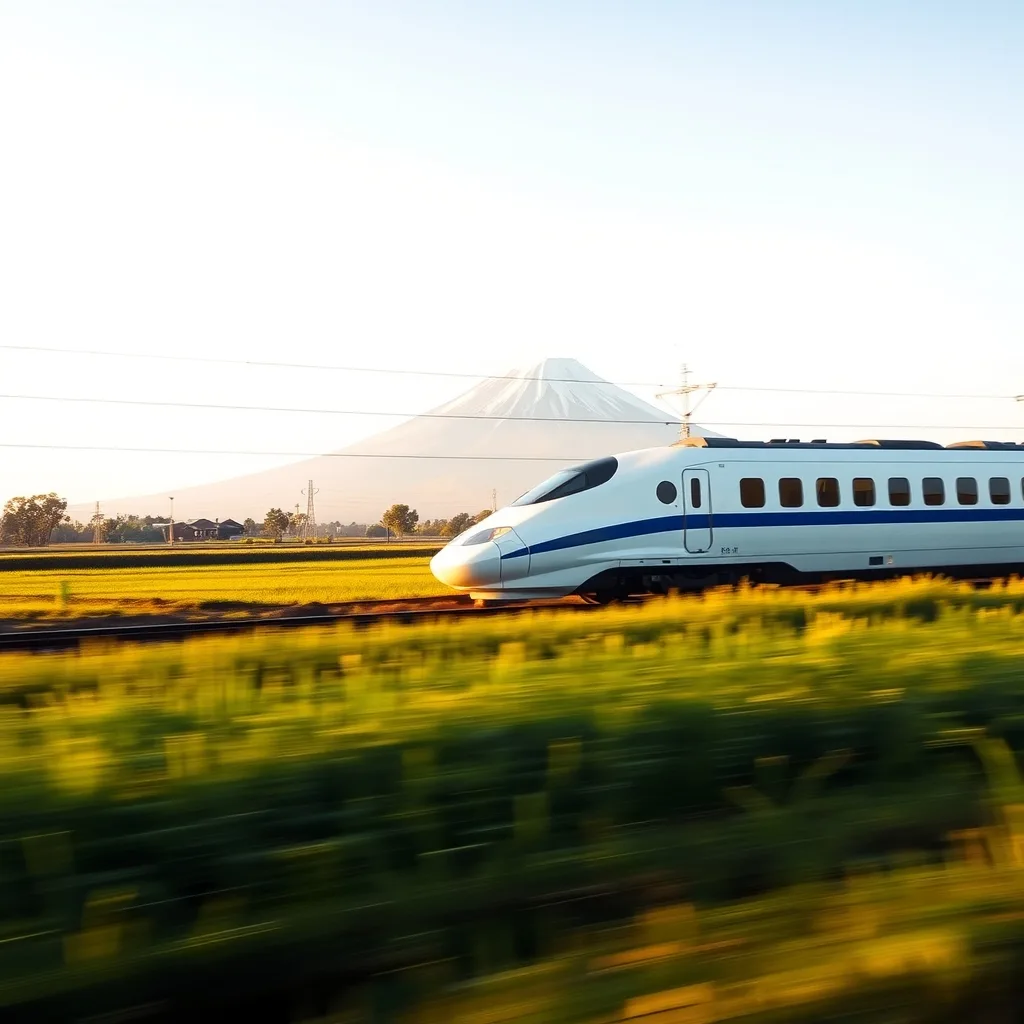
Pick a reserved seat. Two people travelling together should book seats D and E on the right-hand side going Tokyo → Kyoto — that is the Mount Fuji side, roughly 45 minutes out of Tokyo on a clear morning.
Pay. The 3D Secure screen appears here. Approve it in your banking app or via OTP.
Choose how you will board — a QR code, or link an IC card. More on that below.
What it costs
Tokyo → Kyoto (one way, per person) | Fare | ≈ ₹ |
|---|---|---|
Nozomi, reserved | ¥14,170 | ₹8,360 |
Nozomi, non-reserved | ¥13,320 | ₹7,860 |
Hikari, reserved | ¥13,850 | ₹8,170 |
Green Car (Nozomi) | ¥19,270 | ₹11,370 |
Approximate; fares vary by season and the ₹ figure moves with the exchange rate.
Reserved-seat fares shift a little with JR's four seasons: ¥200 less in the off-peak season, ¥200 more in peak, ¥400 more in the top season (Golden Week, Obon, New Year). So the same Tokyo–Kyoto reserved seat runs roughly ¥13,970–14,570 (≈₹8,240–8,600) depending on when you travel. Non-reserved does not change.
Smart EX charges the standard fare — booking online is not cheaper than the station window, though some trains carry a small early-bird discount. The saving from booking ahead is a seat and a schedule, not money.
For a couple doing Tokyo → Kyoto → Osaka → Tokyo, that is roughly ¥29,470 (≈₹17,400) per person in rail. Which is exactly why, as we worked out in our Japan Rail Pass breakdown, the ¥50,000 (≈₹29,500) 7-day pass loses money on this route — you are better off buying these legs individually. Slot the figure into the wider Japan trip cost from India and rail lands at around 10–12% of a typical week's budget.
How far ahead can you book?
Reservations open at 10:00 JST — 06:30 IST — exactly one month before your boarding date, and stay open until 4 minutes before the train departs. Smart EX accepts bookings between 05:30 and 23:30 JST.
For a couple travelling in normal weeks, there is no need to set an alarm; Tokaido Shinkansen run every few minutes and reserved seats stay available for days. Set the alarm only if your travel date falls in one of these windows:
Obon — 7–16 August 2026
Golden Week — late April to early May
Year-end and New Year — late December to early January
Cherry-blossom weekends in late March and early April
In those weeks the good departures genuinely go, and — see below — the fallback disappears.
Reserved vs non-reserved (and when non-reserved is the smarter buy)
Non-reserved saves ¥850 (≈₹500) on Tokyo–Kyoto and buys you total flexibility: turn up, join the queue on the platform for cars 1–3, take any free seat. On a Tuesday in October with hand luggage, that is often the better ticket.
Reserved is worth the ₹500 when any of these is true:
You are travelling with large suitcases. Standing for 2 h 15 m holding a 25 kg bag is the single most common regret on this route.
You are two people who want to sit together. Non-reserved seating does not guarantee it.
You are travelling on a Friday evening, Sunday evening, or in a peak week.
And one hard rule that removes the choice: from 7 to 16 August 2026, every Nozomi and Mizuho service runs all-reserved. There are no non-reserved carriages on those trains during Obon (the same applies in Golden Week and over New Year). Hikari, Kodama and Sakura still carry non-reserved cars, but they are slower and they fill. If your dates touch that window, book reserved, and book early.
Tip: Miss your train and you are not stranded. A reserved Smart EX ticket lets you ride a non-reserved seat on any later train the same day along the same section, no ticket counter needed. The exception is discounted early-bird (Hayatoku) fares, which are locked to the booked train — worth knowing before you chase a small saving.
Collecting the ticket: QR, IC card, or the station window
You have three ways to actually board, and you choose at booking:
QR ticket — displayed on your phone, scanned at the Shinkansen gate. Simplest for a first trip.
A linked IC card — register a Suica, PASMO or ICOCA number in Smart EX's "My Trips" and assign it to the journey. You then tap that card at the Shinkansen gate. Nothing prints.
Paper ticket at the station — collect at a machine or the JR ticket office before travelling.
The IC card point confuses almost everyone, so state it plainly: you cannot pay for a Shinkansen reserved seat by tapping a Suica. Suica's balance covers local metro, JR local lines, buses and konbini purchases. What Smart EX does is let a registered Suica act as the ticket for a journey you already paid for by card. Two separate things.
If you are setting up Suica on your phone before you fly, our Japan travel apps guide covers which wallet works on which handset — the iPhone and Android situations are genuinely different, and Indian-market Android phones are the awkward case.
The oversized-suitcase rule that catches Indian travellers
This one is written for weekend-bag tourists and quietly ambushes anyone flying in for two weeks with full-size check-in luggage.
On the Tokaido, Sanyo, Kyushu and Nishi-Kyushu Shinkansen, a bag whose three dimensions (length + width + height) add up to more than 160 cm and up to 250 cm counts as oversized baggage and requires a "seat with oversized baggage area" — booked in advance, at the same time as your seat.
The seat costs nothing extra. It is an ordinary reserved seat, at the ordinary reserved fare, that happens to sit in front of the luggage space.
Boarding with an oversized bag without one costs ¥1,000 (≈₹590) per bag, and staff do enforce it.
Over 250 cm is not allowed on board at all.
You reserve it one month ahead, like any other seat.
Measure before you leave India. A typical 32-inch check-in suitcase — the size most Indian families take to Japan — is commonly around 82 × 52 × 33 cm, which totals about 167 cm and is already over the line. The 28-inch case usually clears it. If in doubt, book the baggage seat; it is free.
Tip: Bags under 160 cm total need no reservation — put them on the overhead rack or in the space behind the last row of seats, which is first-come and fills fast on peak trains.
If your card is refused anyway
It happens, and there is a working ladder of fallbacks. In order:
Retry with a different card, ideally a credit card from a different issuer. Indian debit cards fail more often than credit cards on 3D Secure.
Call your bank and ask them to whitelist the merchant. Japanese rail transactions sometimes trip fraud rules simply because the merchant is foreign and the amount is unusual.
Try Klook for Tokaido and Sanyo legs — same fare, different payment processor.
Buy at the station in Japan. This is JR's own recommended fallback and it works: the multilingual reserved-seat ticket machines and the JR ticket office (Midori-no-Madoguchi) at Tokyo, Shinagawa, Shin-Osaka and Kyoto stations take foreign cards in person, with no 3D Secure step. Many cards that fail online succeed here.
The cost of falling back to option 4 is not money — it is choice. Arrive in Japan without seats booked during a peak week and you take what is left.
Where this fits in the trip
Booking the trains is a downstream decision. You cannot reserve a Tokyo–Kyoto seat until you know which morning you are leaving Tokyo, which means the dated itinerary comes first — the same document Indian travellers already need for the visa itinerary submission.
Two routes where the rail booking changes shape:
On the 5-day solo Japan route, you are buying two legs and non-reserved is often fine.
On a longer Sanyo run like the Hiroshima day trip from Osaka, you are on the train for most of two hours each way, both legs on the same day — reserve both directions, and check whether a regional pass beats point-to-point on that stretch.
FAQ
Can I book Shinkansen tickets from India before I travel? Yes. Register on Smart EX with an overseas address and book from India — no Japanese address, phone number or SIM required. Reservations open at 10:00 JST (06:30 IST) one month before your boarding date.
Will my Indian credit card work on Smart EX? It will if two things are true: international and online transactions are switched on in your banking app (RBI rules mean they are off by default), and the card is enrolled in 3D Secure with your bank. Smart EX accepts Visa, Mastercard, Amex, JCB, Diners Club and Discover issued overseas — no brand is privileged.
How far in advance can I book Shinkansen tickets? One month, from 10:00 JST on the date exactly one month before travel, up to 4 minutes before departure. Smart EX takes bookings between 05:30 and 23:30 JST.
Do I need a reserved seat? Not usually — non-reserved saves about ¥850 (≈₹500) on Tokyo–Kyoto and works fine off-peak. Reserve if you have large suitcases, want to sit together, or travel on a peak date. From 7–16 August 2026 all Nozomi and Mizuho services are reserved-only, so the choice disappears.
Can I use a Suica card to pay for the Shinkansen? No. Suica pays for local trains, metro, buses and konbini. You can, however, register a Suica in Smart EX and tap it at the gate as your ticket for a Shinkansen journey you paid for by card.
What happens if I miss my train? Your reserved ticket is valid for a non-reserved seat on a later train the same day over the same section — just board, no counter visit needed. Discounted early-bird (Hayatoku) fares are the exception and are tied to the booked train.
Do I need to book a space for a large suitcase? Yes, if the bag's three dimensions total more than 160 cm, on the Tokaido, Sanyo, Kyushu or Nishi-Kyushu lines. The oversized-baggage seat is free — you just have to reserve it. Without one you pay ¥1,000 (≈₹590) per bag on board.
Is booking online cheaper than buying at the station? No. Smart EX sells at the standard fare, with small early-bird discounts on some services. You book ahead for the seat and the certainty, not the price.
Book the route before you book the seats
Every question on this page — which train, which day, reserved or not, one suitcase seat or two — is downstream of one thing: the dated plan. Get the days fixed, and the bookings become a half-hour of admin.
Tell NextDestination.ai your dates, your cities and how you like to travel, and it will build your custom Japan travel itinerary day by day — the same document that goes to the visa office, and the one you will have open in the other tab while you book these seats.
Fares, rules and dates verified as of 2 August 2026 against Smart EX, JR Central and JR West published information. Rail fares and peak-period dates change — reconfirm on smart-ex.jp before booking.