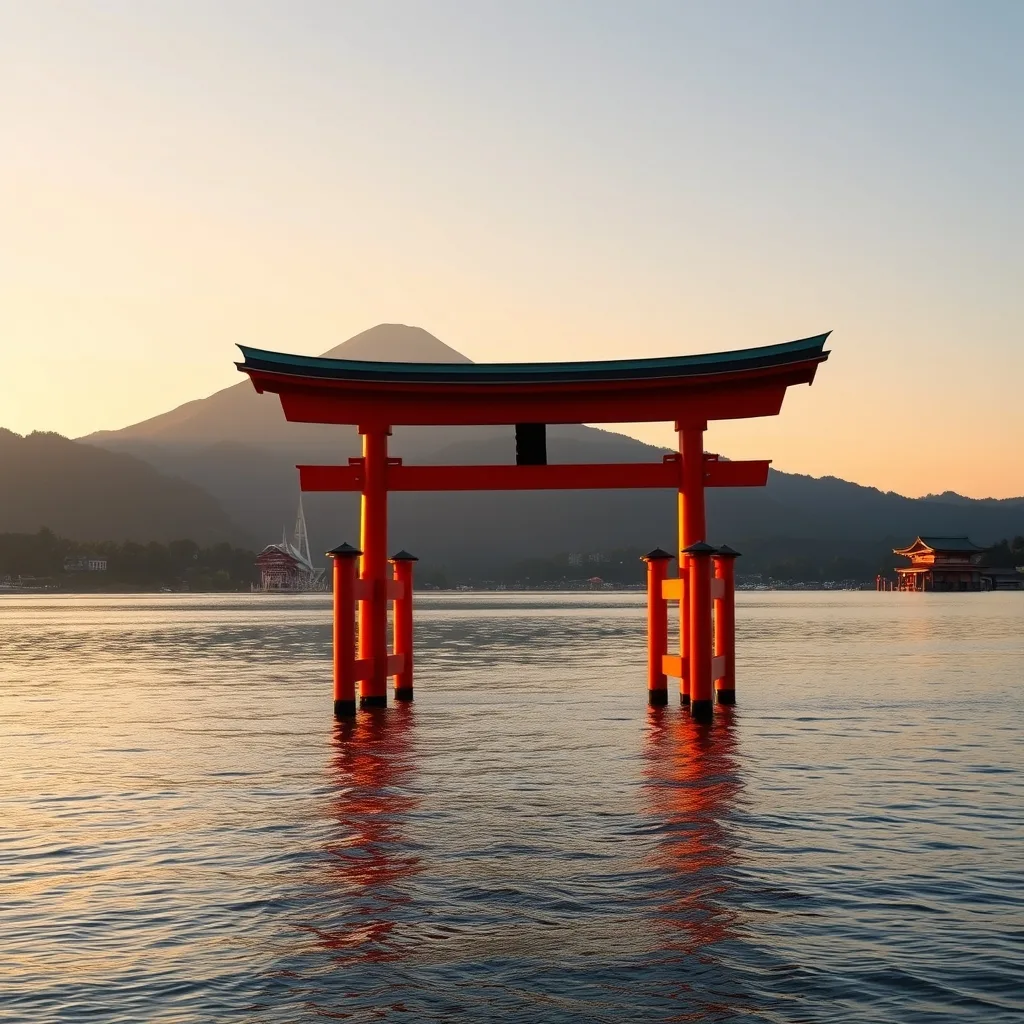
Yes — do the Hiroshima day trip from Osaka if you have five or more days in Kansai. Skip it if you don't. It costs roughly ₹14,500 per person and eats about 15 hours door to door, and there is no honest way to shrink either number. On a five-day Kansai stay it's the best day you'll have. On a three-day one, it's the day that ruins Kyoto.
Hiroshima sits 1 hour 25 minutes from Shin-Osaka on the Sanyo Shinkansen, which makes it look like a casual side trip. It isn't. The travel is easy; the day is long. Below is the full plan — real train departures, a ₹ breakdown, and the two ways people get this day wrong.
(₹ figures use ¥1 ≈ ₹0.59, the rate in late July 2026. Yen prices are set by JR and the sites themselves and are stable; the rupee equivalents are approximate and move with the exchange rate.)
The 30-second verdict
Your Kansai plan | Do the day trip? |
|---|---|
5+ days based in Osaka or Kyoto | Yes — this is the standout day |
4 days, Kyoto already covered | Yes, but — you'll feel the squeeze |
3 days or fewer in Kansai | No — you'll shortchange Kyoto |
7+ days, want it relaxed | Overnight in Hiroshima instead |
The reason is simple arithmetic. A Hiroshima day trip removes one full day from Kansai and gives you roughly six usable hours on the ground. If you only have three days in Kansai, you're trading a third of your Kyoto and Osaka time for six hours in another prefecture — and Kyoto is what most first-time Indian travellers came for. Our 3-day Kyoto itinerary is already tight at three days; cut a day out of it and you're speed-walking Fushimi Inari.
But if you have the days, Hiroshima earns them. The Peace Memorial Museum is the single most affecting hour in Japan, and Miyajima's floating torii is the image that made you want to come here in the first place. Doing both in one day is genuinely achievable — as long as you start at 5:30 am and accept that you'll get back after 8 pm.
What it actually costs in ₹
Per person, solo, using individual tickets and reserved Shinkansen seats:
Item | Yen | ₹ (approx) |
|---|---|---|
Shin-Osaka ⇄ Hiroshima Shinkansen (reserved, return) | ¥21,280 | ₹12,600 |
Hiroshima ⇄ Miyajimaguchi (JR Sanyo Line, return) | ¥840 | ₹500 |
Miyajima ferry return + ¥100 visitor tax | ¥500 | ₹300 |
Hiroden streetcar (flat fare, two rides) | ¥480 | ₹280 |
Peace Memorial Museum entry | ¥200 | ₹120 |
Itsukushima Shrine entry | ¥300 | ₹180 |
Lunch + snacks | ~¥1,200 | ₹700 |
Total | ~¥24,800 | ~₹14,700 |
All figures approximate; rail fares vary by seat class and booking window, and the ₹ conversion moves with the exchange rate.
Two ways to cut that. Unreserved seats on the Shinkansen save roughly ¥500–600 each way (about ₹600–700 return) — fine outside Golden Week and Obon, risky during them. And Smart-EX, JR's official booking app, offers EX Hayatoku fares if you book 21 days ahead; it's the same discount logic covered in our Japan Rail Pass math for Indians.
Tip: ₹12,600 of that ₹14,700 is the train. If you're doing Hiroshima plus Himeji, Kobe or Nara within five days, price the JR Kansai–Hiroshima Area Pass (¥17,000, ≈₹10,000) — unlike the national JR Pass, it does cover the fast Nozomi and Mizuho on the Shin-Osaka–Hiroshima stretch, and it covers the Miyajima ferry. For this one day alone it doesn't pay; for two or three Sanyo-line days it usually does.
The hour-by-hour day trip itinerary
This is built around the first realistic Shinkansen out and a comfortable train back. Times are 2026 schedules — always reconfirm on the day, since JR adjusts timetables in March.
05:30 — Leave your hotel
The Midosuji subway line starts running around 05:15–05:30, and Namba to Shin-Osaka takes about 17 minutes (¥240–290). If your hotel is in Umeda you have a shorter run; if you're staying in central Kyoto instead, Kyoto Station is a direct Shinkansen stop and you can leave 20 minutes later.
06:00 — Mizuho 601, Shin-Osaka → Hiroshima (arrives 07:25)
The first fast train of the day, 1 hour 25 minutes, and by far the most valuable seat you'll book. Reserve it — this train fills with business travellers.
Important if you hold a national JR Pass: the Ordinary pass does not cover Mizuho or Nozomi. You'll take a Sakura instead, which departs a little later and takes 1 hour 30–40 minutes. Build in the extra half hour.
07:40 — Streetcar to Genbaku Dome-mae
From Hiroshima Station, Hiroden streetcar lines 2 or 6 run to the Peace Park in about 20 minutes for a flat ¥240. It's slow, it's charming, and it drops you directly opposite the A-Bomb Dome. Pay on exit; IC cards like ICOCA and Suica work.
08:00 — The A-Bomb Dome, before the crowds
You get the Dome almost to yourself at 8 am, which matters — by 11 it's ringed with tour groups. Ten quiet minutes here before the museum is the right order.
08:20 — Hiroshima Peace Memorial Museum
Entry is ¥200 (about ₹120) — one of the cheapest world-class museums anywhere. It opens at 07:30 every day of the year, which is precisely why the 06:00 train works. (Closing is 19:00 March–November, 18:00 December–February, 20:00 through August; last entry 30 minutes before.)
Give it 90 minutes minimum. Book ahead on hpmmuseum.jp if you're visiting near 6 August, when the annual memorial ceremony makes the park extremely busy.
Two honest notes for a solo traveller: the first gallery is confronting in a way photographs don't prepare you for, and most people come out quieter than they went in. Budget a little decompression time — don't schedule a jokey lunch for 10:05.
10:00 — Peace Memorial Park on foot
The Children's Peace Monument (Sadako Sasaki's paper cranes), the Cenotaph, and the Flame of Peace are all within a 15-minute walk of each other. The sightline from the Cenotaph through the Flame to the Dome is deliberate — stand there for a minute.
11:00 — Lunch: Hiroshima okonomiyaki, including the vegetarian version
Hiroshima's okonomiyaki is layered rather than mixed, with noodles inside — and the standard version contains pork, sometimes squid, and egg in the batter. Vegetarians usually assume it's off the menu here. It isn't.
Nagataya, a two-minute walk from the Peace Park, keeps a clearly labelled menu with three fully vegan okonomiyaki and several more vegetarian ones, at around ¥1,000–2,000 (₹600–1,200). It's the single best veg-friendly meal in the city and it happens to be exactly where you already are. Jirokichi, also central, does a vegan version too.
One caveat worth stating plainly: these are shared teppan griddles, so if you avoid cross-contact entirely rather than just avoiding meat, say so when you order. The staff are used to the question. For the wider strategy — reading labels, conbini options, the dashi problem — see our vegetarian food guide for Kyoto and Osaka and the broader vegetarian in Japan survival guide.
12:15 — Get to Miyajima (two routes)
The efficient route: streetcar or JR back to Hiroshima Station, then the JR Sanyo Line to Miyajimaguchi — 25 minutes, ¥420 — then the JR ferry, 10 minutes, ¥200 plus the ¥100 Miyajima visitor tax. Total about an hour. In daylight the JR ferry deliberately swings close to the great torii on the way over, at no extra cost. Sit on the right.
The scenic route: the World Heritage Sea Route boat leaves from Motoyasu Pier inside the Peace Park itself and sails straight to Miyajima in 45 minutes for ¥2,400 (≈₹1,400). It costs more and runs roughly hourly, but it saves the backtrack to Hiroshima Station and turns transit into sightseeing. If your budget can absorb ₹1,400, take it.
13:30 — Itsukushima Shrine and the floating torii
Shrine entry is ¥300 (≈₹180). The shrine's stilted corridors sit over the water at high tide — the postcard — and over wet sand at low tide, when you can walk right up to the torii and touch it.
Both are worth seeing; they're just different photographs. Check the tide table before you fix your date (the Miyajima tourist association publishes it), and if you have any flexibility, pick a day where high tide falls in the early afternoon.
Tip: The great torii's five-year restoration finished in December 2022, so the scaffolding that ruined thousands of holiday photos is long gone. Any blog picture you see with scaffolding is stale.
14:30 — Daisho-in, deer, and optional Mount Misen
Daisho-in Temple is a ten-minute uphill walk from the shrine, free to enter, and consistently the thing solo travellers say they didn't expect to love — hundreds of small stone statues, spinning prayer wheels along the staircase, and almost no crowd.
Mount Misen needs the ropeway (¥2,000 return, ≈₹1,200) plus a 20–30 minute walk to the actual summit. Realistically it needs 2.5 hours you don't have on a day trip. Skip it, or drop Daisho-in and commit properly — don't half-do it and miss your ferry.
The island's wild deer will investigate your bag. They are not fed by visitors here, and they will eat a paper map, a ticket, or a boarding pass. Zip things away.
16:45 — Ferry and train back to Hiroshima
Ferries run every 10–15 minutes; the JR Sanyo Line gets you back to Hiroshima Station by about 17:45.
18:00 or 18:45 — Shinkansen back to Shin-Osaka
Anything up to roughly 22:12 works as a last train, so there is real margin here — but taking an 18:00–18:45 departure gets you back to Osaka by about 20:15 with dinner still possible. Use the buffer for a slower Miyajima, not a later night.
Door to door: leave 05:30, back around 20:45. That's 15 hours. Call it what it is.
The two mistakes people make
Mistake 1: doing it on a 3-day Kansai stay. You will spend ₹12,600 on train tickets to get six hours in Hiroshima, and you'll have removed a third of your Kyoto time to do it. Almost everyone who regrets this trip made this specific error.
Mistake 2: trying to add Himeji Castle on the way back. It's on the same Shinkansen line and it looks free. It isn't — Himeji needs 3 hours and closes at 17:00. Do it as its own half-day, or not at all.
Doing it from Kyoto instead
Kyoto works essentially the same way: Kyoto → Hiroshima is about 1 hour 40 minutes on a Nozomi or Mizuho, one stop further out than Shin-Osaka, and roughly ¥11,300–11,900 each way (₹6,700–7,000) reserved. Add about 30 minutes to the round trip and ₹2,000 to the budget. Everything else in the plan above is unchanged.
Should you just stay the night?
If your Japan trip is 10 days or longer, yes — and it's a better trip. An overnight in Hiroshima costs roughly ₹4,000–7,000 for a solid business hotel, saves you nothing on the train, but converts a 15-hour march into two unhurried half-days: Peace Park in the evening light, Miyajima the next morning before the day-trippers arrive from Osaka at 11 am. Our 14-day Japan itinerary builds Hiroshima in this way. On a 5–7 day trip, the day trip is the right call.
Where this fits in a first Japan trip from India
For a solo traveller on a first trip, the shape that works is: Tokyo first, then Kansai as your base, then Hiroshima as the day you add once the essentials are covered. Our 5-day solo Japan itinerary deliberately leaves Hiroshima out — five days doesn't have room for it. Stretch to seven or eight and it goes in.
Two follow-ups you're probably about to search. Total trip cost: budget roughly ₹1,50,000–₹2,20,000 for a 7–10 day solo trip from India including flights, depending on season and booking window (approximate; varies) — the line items are in our Japan trip cost from India breakdown. Visa: Indian passport holders need one, and the application requires a day-by-day itinerary — if Hiroshima is in your plan, put it in that document. Our Japan visa itinerary sample shows the format the embassy expects.
And on timing: late October to November and February give the best weather-to-price ratio for this trip. Avoid Golden Week (late April–early May) and cherry-blossom peak (late March–early April) — both are peak season, when Shinkansen reserved seats sell out and Miyajima is shoulder-to-shoulder. More in our best time to visit Japan from India guide.
FAQ
Is a Hiroshima day trip from Osaka worth it? Yes if you have five or more days in Kansai. The Peace Memorial Museum and Miyajima's floating torii are both first-rank sights, and the Shinkansen makes the distance manageable. Skip it on a three-day Kansai stay — six hours in Hiroshima isn't worth a third of your Kyoto time.
How much does a Hiroshima day trip from Osaka cost? About ₹14,500–15,000 per person in 2026, of which roughly ₹12,600 is the return Shinkansen (¥21,280 reserved). Entries are cheap: ¥200 for the Peace Memorial Museum, ¥300 for Itsukushima Shrine. Approximate; varies by seat class and booking window.
How long is the train from Osaka to Hiroshima? 1 hour 25 minutes from Shin-Osaka on a Mizuho or Nozomi, about 1 hour 30–40 on a Sakura. Note that the Ordinary JR Pass doesn't cover Nozomi or Mizuho, so pass holders should plan for the Sakura timing.
Can you do Hiroshima and Miyajima in one day from Osaka? Yes, and most people should do both rather than one — they're 45 minutes apart and the day is built for it. It needs a 06:00 departure from Shin-Osaka and gets you back around 20:45. About 15 hours door to door.
Is the Japan Rail Pass worth it for this trip? Not for the day trip alone. A 7-day national pass costs ¥50,000 (≈₹29,500) against ¥21,280 for these tickets, and it doesn't cover the fast Mizuho or Nozomi. The regional JR Kansai–Hiroshima Area Pass at ¥17,000 is the better buy if you're doing two or three Sanyo-line days.
Is there vegetarian food in Hiroshima? Yes. Nagataya near the Peace Park serves clearly labelled vegan and vegetarian Hiroshima-style okonomiyaki (¥1,000–2,000), and Jirokichi does a vegan version too. Standard okonomiyaki contains pork and often egg, so order from the labelled menu rather than asking for a modification.
What's the first and last train? The first fast train is the Mizuho 601, Shin-Osaka 06:00 → Hiroshima 07:25. The last departure back from Hiroshima to Shin-Osaka is around 22:12, so an 18:00–18:45 train leaves you a comfortable buffer.
Do I need to book the Shinkansen in advance? For the 06:00 out, yes — reserve it, it's a commuter-heavy train. The return is flexible outside Golden Week and Obon — in 2026, Nozomi runs with no unreserved cars at all from 7 to 16 August, and reserved seats sell out days ahead.
Build the trip around it
The real question isn't whether Hiroshima is good — it is. It's whether your itinerary has the day to spare. Settle the route first, then slot this in.
The quickest way to find out is to let the planner lay out your days: build your custom Japan travel itinerary on NextDestination.ai, see how many days Kansai actually gets, and then decide whether one of them belongs to Hiroshima. If your plan comes back with five or more days in Kansai, book the 06:00 train.