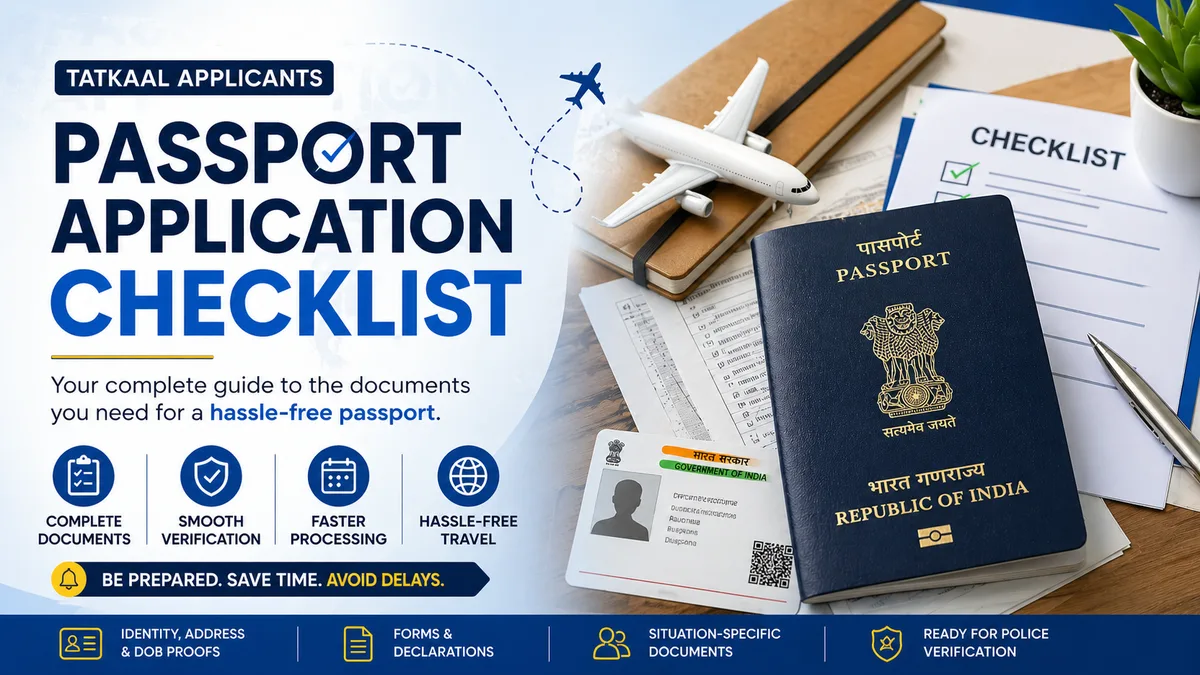
Starting 1 November 2026, Japan is ending instant tax-free shopping at cash registers: instead of paying the pre-tax price in stores, all foreign tourists will pay the full tax-inclusive price upfront and claim their 10% consumption tax refund digitally at the departure airport. For travellers flying from India, this overhaul alters not just what you spend at the counter, but how much credit card headroom you must carry, how you sequence your shopping days across your itinerary, and how early you must arrive at Tokyo Haneda, Narita, or Kansai International Airport before flying home.
If your travel dates fall on or after 1 November 2026, you will no longer walk out of Bic Camera, Yodobashi, or Don Quijote having saved 10% at the till. You will pay the full sticker price, scan your passport and digital customs code at an airport terminal before bag drop, and wait between 1 to 4 weeks to see the funds credited back to your Indian credit card or bank account.
(All ₹ figures in this guide are approximate estimates based on September 2026 exchange rates of ¥100 ≈ ₹56–58. Actual costs and refunds fluctuate based on daily forex rates, bank processing fees, and individual store administrative charges.)
What Changes on 1 November 2026: The Old vs New System
Japan's National Tax Agency (NTA) is restructuring the tourist tax-free system to combat a multi-billion-yen domestic resale black market, where dishonest actors purchased massive quantities of luxury goods and electronics tax-free and resold them inside Japan at commercial markups.
To shut down domestic resale while keeping shopping attractive for legitimate overseas visitors, Japan is replacing point-of-sale tax exemption with the international standard refund-at-departure model. The official procedures are outlined by the National Tax Agency and Japan Customs.
Here is a side-by-side comparison of how shopping in Japan changes on 1 November 2026:
Feature | Until 31 October 2026 | From 1 November 2026 | Impact on Your Trip |
|---|---|---|---|
Where You Pay Tax | Deducted instantly at checkout | Paid in full at checkout; refunded at airport | Requires 10% more card/cash limit upfront |
Minimum Spend | ¥5,000 (pre-tax) per shop/day | ¥5,000 (pre-tax) per shop/day | Unchanged; easy to pool purchases |
Category Separation | General goods vs Consumables split | Abolished (single combined threshold) | Easier to hit the ¥5,000 minimum |
Sealed Plastic Bags | Mandatory for consumables (no opening) | Eliminated (goods can be opened & used) | Pack clothes or toiletries normally |
Export Time Limit | 30 days (consumables) / 6 months (general) | 90 days from date of purchase | Ample window for standard 1–3 week holidays |
Customs Clearance | Passive paper slip / digital log at security | Automated terminal scan before check-in | Requires 30–45 min departure morning buffer |
The single biggest operational improvement under the new system is the elimination of the sealed tamper-evident red-tape plastic bags. Previously, if you bought skin serums, sunscreen, or matcha snacks, shops sealed them in thick plastic that you were legally forbidden from opening until departing Japan. After 1 November 2026, general goods and consumable items are unified into a single purchase threshold, and you are permitted to use products during your trip provided they leave Japan with you within 90 days.
Tip: While the categories are unified to help you reach the ¥5,000 qualifying spend, remember that Japan levies a dual consumption tax: 10% standard on electronics, clothing, watches, and alcohol, but a reduced 8% rate on packaged food and non-alcoholic drinks. If you buy a basket of Japanese sweets and souvenirs, your refund on those items will be calculated at 8%, not 10%.
The Indian Traveller Moat: The Forex Double-Conversion Math
Most international shopping guides gloss over the currency mechanics, cheerfully telling readers they will "get 10% back." For Indian passport holders paying with INR-denominated credit or debit cards, the arithmetic is substantially more nuanced.
When you purchase goods in Japan, your Indian bank converts Japanese Yen (JPY) to Indian Rupees (INR) at their foreign currency sell rate and tacks on a foreign exchange markup (typically 1.5% to 3.5% plus 18% GST on the markup fee, unless you use a zero-forex card). Several weeks later, when the tax refund is remitted to your card, the refund is processed at your bank's foreign currency buy rate—and your original transaction markup fees are not refunded. Furthermore, major department stores (such as Takashimaya, Isetan, or Daimaru) and global refund operators routinely deduct an administrative handling commission (typically 1.55% to 2.1% of the purchase value).
Worked ₹ Example: Buying Camera Gear in Tokyo
To see how this affects your wallet in practice, consider an Indian traveller buying a lens or high-end watch at Yodobashi Camera in Akihabara with a sticker price of ¥100,000 (pre-tax):
In the Store (Checkout): You pay the tax-inclusive price of ¥110,000. On an Indian credit card with a standard 2% forex markup at ¥100 ≈ ₹57, your card is charged approximately ₹63,950 (¥110,000 = ₹62,700 base + ₹1,250 bank forex markup and GST).
At the Airport Terminal: You scan your passport and boarding pass at the automated customs desk. The system approves your claim for the 10% consumption tax (¥10,000).
Store / Operator Handling Fee: If processed via a shopping refund counter with a standard 1.55% service fee, ¥1,550 is deducted, leaving a net refund of ¥8,450.
Credit Card Refund Arrival (2–4 Weeks Later): When the ¥8,450 refund posts to your Indian credit card, your bank converts it back to INR at their prevailing buying rate (typically 1% below interbank rate, roughly ¥100 ≈ ₹56.40), yielding approximately ₹4,765.
Your net expenditure ends up at ₹59,185 on an item whose pre-tax equivalent was ₹57,000. Your real-world cash savings are approximately 7.6%, rather than a clean 10%. While 7.6% is still a meaningful saving on substantial electronics or luxury purchases, understanding this arithmetic prevents unpleasant surprises on your monthly credit card statement.
Tip: To maximise your refund yield, make your tax-free purchases with a dedicated zero-forex-markup card (such as Niyo Global, Scapia, or an AU Ixigo card) rather than a traditional domestic rewards card with a 3.5% foreign transaction fee. Review our comprehensive Japan trip cost from India guide for a complete breakdown of cards and cash strategies.
How to Claim Your Tax Refund at the Airport
Claiming your refund under the 2026 system is an orderly, digital process, but it requires strict adherence to physical logistics. The most critical rule is: you must scan your purchases at the Customs Tax-Free Inspection terminal BEFORE you drop your checked luggage at the airline check-in counter.
Step 1: Prepare Your Passports and Digital Code
When making qualifying purchases in shops, always present your physical passport (with its temporary visitor entry stamp). The merchant records your purchase digitally against your passport number and transmits the receipt to the National Tax Agency database. You can also link your tax-free transactions directly into your Visit Japan Web account by registering before departure; see our setup instructions in the best Japan travel apps guide.
Step 2: Locate the Customs Terminal Before Check-In
Upon arriving at Tokyo Haneda (Terminal 2 or 3), Narita (Terminal 1 or 2), or Kansai International Airport (Terminal 1), proceed immediately to the Customs Tax-Free Inspection Area located in the public departure hall near the international check-in desks.
Scan your physical passport and your digital boarding pass (or flight reservation QR code) at the automated kiosk.
Step 3: Green Light vs Red Light Outcomes
The automated kiosk verifies your recorded transactions in the NTA cloud:
Green Screen (Approved): Your export declaration is cleared instantly. You may immediately proceed to your airline counter, check your suitcases, and head through security and passport control. Your refund will be credited automatically to your designated card.
Red Screen (Inspection Required): The system flags your profile for a spot check (frequently triggered by high-value transactions exceeding ¥500,000, luxury watches, or bulk purchases of identical tech items). You will be directed to an adjacent customs officer desk where you must show the physical items in your luggage.
If you had already checked your suitcase with the airline, you would be unable to present the goods to customs officers—resulting in immediate forfeiture of your entire tax refund, and potential liability for back taxes.
Step 4: Payout Timelines
Depending on the store where you shopped, refund payouts are disbursed via:
Credit/Debit Card: The default and most convenient channel. Funds take between 7 business days to 4 weeks to reflect on your Indian card statement.
Digital Payment Wallets: Major retailers are rolling out direct credits to digital travel accounts.
Airport Cash Counters: Limited counters remain available at major hubs for travellers who paid in cash, though queues can be lengthy.
Itinerary Sequencing: How the Rule Change Alters Your Route
Tax-free shopping is no longer an impulse activity that you can sprinkle across your holiday at random. Because goods must be presented to customs in your departure city and must leave within 90 days, buying early in your itinerary creates heavy logistical baggage.
Avoid the Mid-Trip Luggage Haul
A common itinerary mistake made by first-time visitors to Japan is landing in Tokyo, immediately buying a suitcase full of electronics and Don Quijote souvenirs, and then dragging those heavy bags onto the Shinkansen bullet train to Kyoto and Osaka.
If you plan to forward luggage between cities using Japan's convenient hands-free delivery services, note that separate unescorted shipping (bessō) no longer qualifies for tax exemption. All tax-free goods must exit Japan in your accompanied personal luggage. If you must send non-valuable clothes ahead to travel light, read our tested rules on Japan luggage forwarding with Takkyubin.
Schedule Dedicated Shopping Days at the End of Your Trip
The smartest itinerary design places all major shopping in the final 48 to 72 hours of your journey:
Day 1–3: Arrive Tokyo → Cultural Sightseeing & Shrines
Day 4: Day Trip to Kamakura & Enoshima Coastal Temples
Day 5–7: Shinkansen Nozomi to Kyoto & Osaka
Day 8–9: Return to Tokyo → Dedicated Shopping (Akihabara, Ginza, Shinjuku)
Day 10: Departure Day → 45-min Customs Terminal Buffer at Haneda/Narita
To see how a balanced Tokyo itinerary structures cultural day trips alongside dedicated shopping districts, explore our curated Kamakura day trip route, which pairs relaxing temple strolls with smooth evening returns to Tokyo's premier shopping wards.
The All-Important Departure Morning Buffer
Under the old system, tourists arrived at the airport 2.5 to 3 hours before an international flight back to Delhi, Mumbai, or Bengaluru. Under the November 2026 refund system, you should add an extra 30 to 45 minutes to that timeline:
Haneda Airport (HND): Aim to arrive 3.5 hours prior to departure. Terminal 3 customs desks experience heavy waves ahead of late-morning departures to India and Southeast Asia. Review transit options in our Delhi to Tokyo flight guide.
Narita Airport (NRT): Aim to arrive 3.5 to 4 hours prior to departure, especially if you must travel 60 to 75 minutes on the Narita Express from central Tokyo.
Kansai Airport (KIX): Terminal 1 handles immense passenger volumes for Asian routes; arrive 3.5 hours prior to departure.
Crucial Rules Indian Shoppers Must Know
To ensure your refund claims process smoothly without rejection at the border, keep these legal and practical constraints in mind:
The Matching Name Requirement
The credit card used to pay for the purchase in the store, the passport presented at checkout, and the refund destination account must belong to the same person. Indian families travelling together often designate one primary family member's credit card for all household expenses. If your spouse or adult child purchases goods under their own passport number, you cannot charge it to your card or claim the tax refund to your bank account. Ensure each adult shopper uses their own card and passport.
The Per-Purchase Record Rule
Under NTA regulations, customs clearance is evaluated on a per-purchase-record basis (kōnyū kiroku jōhō 1-ken goto). If you purchase five items on a single receipt (for example, a camera, two lenses, and two memory cards) and you pack the camera in your carry-on but forget and check the lenses without scanning the kiosk, the customs officer cannot verify the full transaction. When a single item on a receipt cannot be inspected, the entire tax refund for that entire receipt is forfeited. Keep all items from each receipt grouped together until you clear airport customs.
Pre-Booking Shinkansen Luggage Space
If your shopping spree includes large hard-shell suitcases, be aware that Japan's Tokaido-Sanyo-Kyushu Shinkansen lines require advance reservations for oversized baggage (luggage whose combined dimensions—length + width + height—exceed 160 cm up to 250 cm). Reserving a designated seat with an oversized baggage area is free but mandatory; learn how to reserve these seats on the official SmartEX platform in our guide to how to book Shinkansen tickets from India.
The ¥3,000 International Tourist Departure Tax
Do not confuse Japan's consumption tax with the International Tourist Tax (Sayonara Tax). All travellers departing Japan pay a flat ¥3,000 departure tax (which was adjusted to ¥3,000 effective 1 July 2026). This tax is automatically bundled into the base fare of your international flight ticket by your airline (Air India, ANA, Japan Airlines, Singapore Airlines, etc.). You do not need to pay it in cash at the airport, nor is it refundable under the tax-free shopping scheme.
Frequently Asked Questions
Can I still get instant tax exemption at the till before 1 November 2026?
Yes. Until 31 October 2026, the traditional tax-free system remains fully operational. As long as you present your physical passport at registered stores and spend at least ¥5,000, the 10% consumption tax will be deducted directly at the register. The mandatory shift to airport refunds takes effect strictly on 1 November 2026.
Is the ¥5,000 minimum spend per item or per store?
The ¥5,000 threshold (pre-tax) applies to the cumulative total spent at the same store on the same day. In multi-floor department stores or mega-retailers like Bic Camera or Don Quijote, you can combine purchases across clothing, electronics, cosmetics, and confectionery to surpass the ¥5,000 mark.
How long does the tax refund take to credit to my Indian credit card?
Most retailers remitting refunds digitally to Visa or Mastercard estimate between 7 business days and 4 weeks for the transaction to reflect in your card balance. Check your net statement for any foreign currency processing variance.
What happens if my flight departs late at night or early in the morning?
The automated Customs Tax-Free Inspection kiosks at Haneda, Narita, and Kansai airports operate 24 hours a day in accordance with international flight departure schedules. Manned inspection desks are staffed whenever scheduled international flights are operating.
Do I need to show cash receipts at customs?
Receipts are transmitted digitally from the merchant directly to the National Tax Agency's central server. However, it is essential to retain your physical itemised register receipts in your carry-on wallet until you have cleared customs and boarded your flight, as officers may request them during a secondary physical inspection.
Where should I stay in Tokyo to be close to the best shopping districts?
For electronics, anime goods, and gadget shopping, stay in Akihabara or Shinjuku. For high-end luxury fashion and flagship boutiques, Ginza and Shibuya are ideal bases. For neighborhood breakdowns, station transit times, and family-friendly hotel chains, consult our guide on where to stay in Tokyo for first-timers as well as our complete 10-day Japan itinerary.
Ready to plan a seamless journey to Japan with perfectly timed shopping days and zero airport stress? Use our intelligent planning engine to build your custom Japan travel itinerary today, complete with transit routes, hotel selections, and downloadable visa schedules.