Yes — Tokyo is very doable for vegetarians once you know two things: which neighborhoods to eat in, and how to dodge dashi (fish stock). Tokyo has more dedicated veg and vegan restaurants than anywhere else in Japan — HappyCow lists 600-plus vegan and vegan-friendly spots across the city in 2026, up from around 250 in 2019 — so in the central wards you're rarely more than a 10-minute walk from a safe meal. This guide is organised the way you'll actually move through the city: by neighborhood, with real, named restaurants, a convenience-store cheat-sheet, and the Indian places to hit when you just want a proper thali.
The one rule that trips up every first-timer: dashi
Before the where, the why-so-careful. The single thing that catches Indian vegetarians off guard in Tokyo isn't meat on the plate — it's the invisible fish stock in almost everything. Dashi, a broth made from kelp and dried skipjack tuna (katsuobushi), is the base of most miso soups, noodle broths, simmered dishes and dipping sauces. A bowl of plain-looking "vegetable udon" is usually sitting in fish broth; "vegetable tempura" often comes with a fish-based dipping sauce.
So "vegetarian" written on a menu doesn't mean what it means in India. The safe move is to eat at places that are explicitly veg/vegan (listed below), and elsewhere to carry a Japanese phrase card. Our broader vegetarian food in Japan survival guide has a ready-to-show dashi translation card and the deeper country-wide context — keep it open on your phone; this post is the Tokyo-specific companion.
Tip: The Japanese for "no fish stock" is dashi nuki de (だし抜きで). Say it when you order at a normal restaurant and many kitchens can accommodate — but at a dedicated veg spot you can just relax and eat.
Where to eat vegetarian in Tokyo, by neighborhood
You'll base yourself near one of Tokyo's big stations and spend most days in two or three areas. Here's a verified veg option (or three) for each of the zones a first-timer actually spends time in.
Shinjuku
Your likely home base, and well covered. Ain Soph. Journey (Shinjuku-Sanchome, a 7-minute walk from Shinjuku Station) is a fully vegan café famous for its fluffy pancakes and hearty lunch plates — a reliable, English-friendly first meal off the plane. Reservations are worth making for dinner and weekends. For a sit-down North Indian dinner, Ashoka sits directly beneath the Shinjuku Hilton in Nishi-Shinjuku and has a clearly marked vegetarian half of the menu (dal, paneer, plenty of breads).
Shibuya, Harajuku & Omotesando
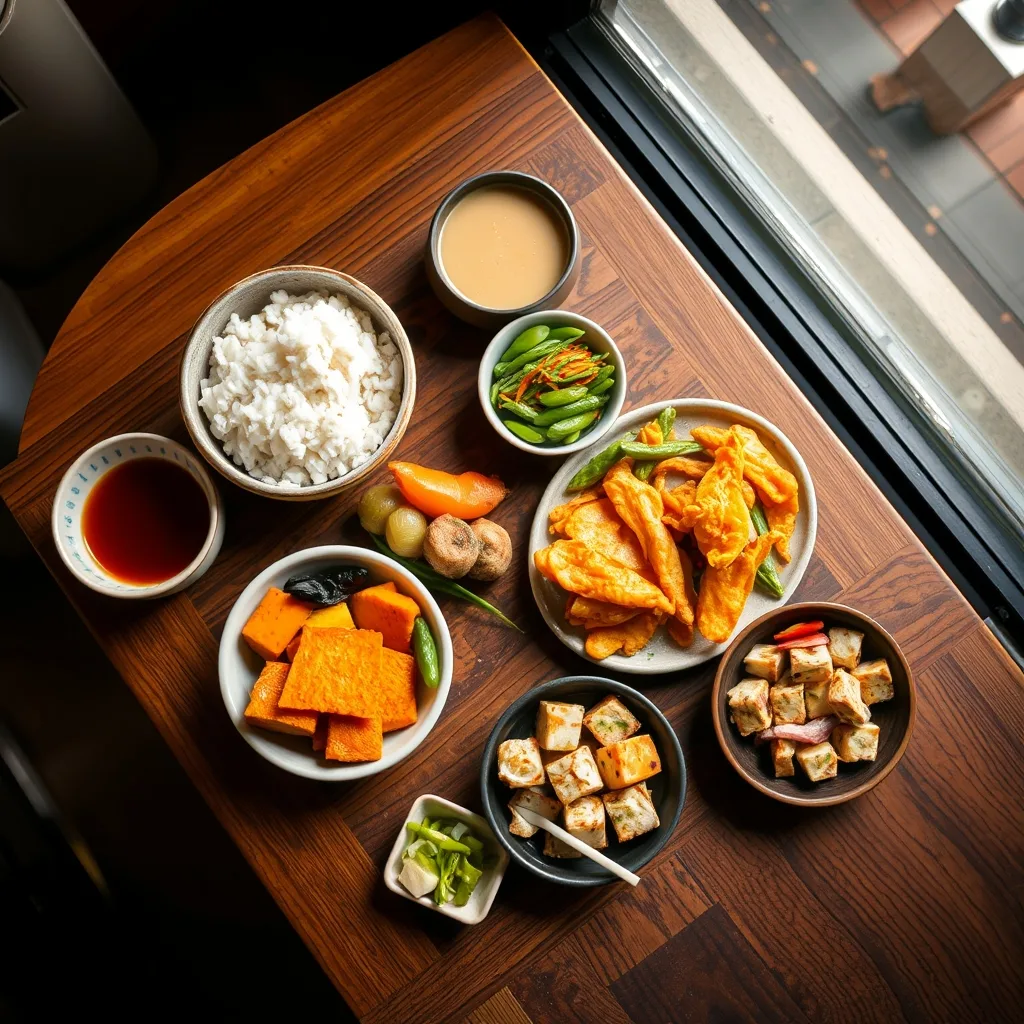
Nagi Shokudo is Shibuya's cult vegetarian shokudo (canteen), tucked on a back street about five minutes south of the station. The lunch set — rice, miso, a drink and three deli dishes, all of it actually vegan — runs around ¥1,000 (roughly ₹550; approximate, varies). A short walk away in the Omotesando/Aoyama fashion district is Nataraj, a pure-vegetarian Indian restaurant that has been running in Tokyo since 1989 — the Aoyama branch does a genuinely good masala dosa and paneer, and it's all-veg so you can order without a single question.
Tokyo Station & Ginza
This is the clutch one, because a lot of first-timers panic about eating on a Tokyo Station transit day. Inside the station's paid area, on the Keiyō Street food strip, is T's TanTan — an all-vegan ramen counter whose sesame tantanmen (with soy meat, no pork, no egg) is genuinely excellent and open 10:00–21:30 daily. It's the single most useful veg address in Tokyo for a traveler. Over in Ginza, Ain Soph. Ginza is the flagship of the same vegan chain (book ahead — it's popular), and for South Indian, Erick South Yaesu near Tokyo Station does dosa, sambar and vegetarian curries. Annam near Ginza Station runs veg-friendly thali-style lunch and dinner sets in the ¥900–1,850 range (about ₹500–1,050; approximate, varies).
Asakusa & the old east
Sightseeing around Sensō-ji and Skytree? Marugoto Vegan Dining Asakusa is a 100%-vegan spot known for its curry rice and lunch plates, and Vegan Eat Tokyo does a Japanese-Italian shōjin-influenced menu with English-speaking staff. Between them you can eat a temple-district lunch without a compromise. (Shōjin ryōri, the Buddhist temple cuisine, is Japan's own centuries-old vegetarian tradition — worth trying once while you're here.)
The konbini cheat-sheet (your India-specific superpower)
Here's the difference between an Indian budget traveler and a Western one: we lean on the convenience store (konbini) far more, because it's cheap, everywhere, and open 24/7. 7-Eleven, Lawson and FamilyMart are your default cheap veg meal — but you have to read them right, because dashi and fish extract sneak into things that look plant-based.
Reliable picks, verified as of 2026:
Plain / salt (shio) onigiri — the safest rice ball. Beware: the umeboshi (plum), kombu (kelp) and takana varieties frequently contain fish extract, so don't assume "no meat = veg."
Edamame, plain green salads (dressing on the side), fruit cups, and cut-vegetable packs.
Inari sushi (sweet tofu pockets over rice) — usually veg, but check the label for dashi.
Bread, mochi, dorayaki and sweet buns for a fast breakfast.
Natural Lawson branches carry the widest plant-based section — worth a detour if there's one near your hotel.
Tip: Learn to spot 魚 (fish) and 肉 (meat) in the ingredient list, or point Google Lens at the label — it translates the packet instantly and is the fastest way to clear an onigiri. This one habit unlocks three cheap, safe meals a day.
When you just want Indian food
Three or four days in, most Indian travelers hit the wall and want home food — that's normal, and Tokyo delivers. Beyond the spots above, Nataraj (pure veg, Aoyama/Omotesando), Erick South (South Indian, Yaesu) and Ashoka (Shinjuku) cover the map. A veg thali or dosa set runs roughly ₹700–1,200 per head (approximate, varies by area and booking). Plan one Indian dinner every couple of days as a reset and you'll never feel deprived. When you're mapping which neighborhood to eat in on which day, our 3-day Tokyo itinerary for couples lines the areas up so you can slot these restaurants into your route.
Roughly what it costs (₹, per person)
Approximate 2026 ranges; ¥100 ≈ ₹55, and prices vary by area and booking window.
Meal type | Yen | Approx ₹ |
|---|---|---|
Konbini meal (onigiri + sides) | ¥400–700 | ₹220–390 |
Veg lunch set (e.g. Nagi Shokudo) | ¥1,000–1,500 | ₹550–830 |
Indian veg thali / dosa | ¥1,200–2,200 | ₹660–1,210 |
Budget travelers can eat well on ₹800–1,200 a day by leaning on the konbini for two meals and one proper restaurant dinner.
FAQ
Is Tokyo more vegetarian-friendly than the rest of Japan? Yes, clearly. Tokyo has the country's densest cluster of dedicated veg/vegan restaurants and the most English-labelled menus, so it's the easiest place in Japan to eat meat-free. Smaller towns and traditional ryokan dinners are where you'll need the phrase card most.
What are the vegetarian options at Tokyo Disneyland and DisneySea? More than you'd expect. At DisneySea, the Casbah Food Court does a vegetable curry with rice and naan (around ¥840), and both parks publish an official plant-based menu online — DisneySea's Restaurant Sakura added a Japanese-style vegetable tempura rice bowl in mid-2026. At Disneyland, Plazma Ray's Diner has a vegetable curry rice bowl (note it's topped with egg, so lacto-veg only). Menus rotate, so confirm at the counter.
I don't eat egg — is that a problem? It's manageable. Dedicated vegan spots like T's TanTan, Ain Soph and Nagi Shokudo are egg-free by default, and pure-veg Indian restaurants let you specify. At normal restaurants, egg turns up in tamago sushi, some ramen and okonomiyaki, so stick to the labelled-vegan places when you want zero doubt.
What about Jain food (no onion, no garlic)? Strict Jain eating is hard in Tokyo — most Indian restaurants use onion and garlic freely. Your safest bets are calling a pure-veg Indian restaurant ahead to ask for a Jain preparation, and self-catering fruit, rice and plain konbini items for the rest.
Build your Tokyo food route
Don't wing it on the ground — decide your neighborhoods first and let the restaurants fall into place. Use our planner to build your custom Tokyo travel itinerary and pin these veg spots to the days you're in each area, so every lunch and dinner is already sorted before you land. Eating vegetarian in Tokyo isn't the ordeal the forums make it sound — with the right list, it's one of the best food cities in Asia for you.