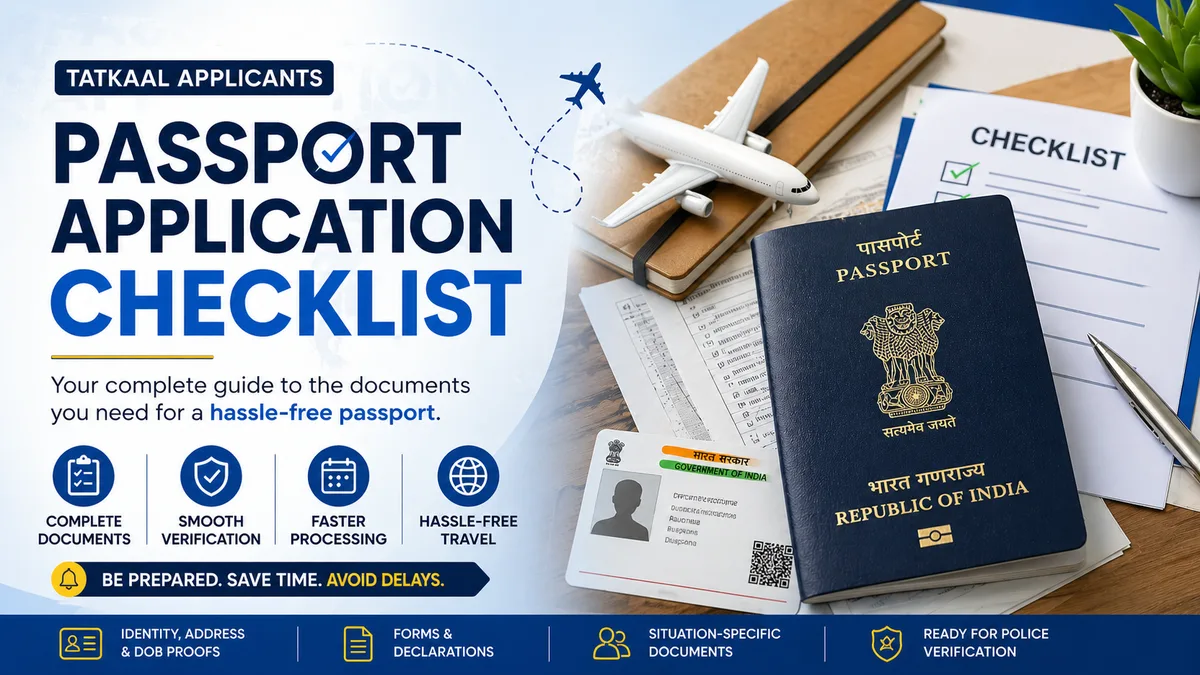
Indian university students and recent graduates (within 3 years of convocation) can obtain a single-entry Japan tourist visa by submitting a certificate of student status (bonafide certificate) or graduation certificate instead of personal Income Tax Returns (ITR) or bank statements. This statutory relaxation—established by the Ministry of Foreign Affairs of Japan (MOFA)—eliminates the requirement for students to show personal financial solvency. However, local VFS Global application counters across India frequently enforce regional checklists requesting parental sponsorship documents and consent letters, meaning that carrying both sets of paperwork guarantees a frictionless submission.
(All visa procedures, statutory fees, and document requirements cited in this guide reflect the official 2026 Embassy of Japan in India and Ministry of Foreign Affairs (MOFA) regulations. Consular authorities evaluate every visa application on an individual case-by-case basis.)
For college students planning a graduation trip, friends booking a budget backpacking journey, or fresh alumni exploring Tokyo before joining their first corporate role, securing a foreign visa often feels daunting. Most countries require three years of filed ITRs or massive personal bank balances. Japan's statutory student waiver removes that hurdle entirely.
Below is the complete breakdown of how the official MOFA relaxation functions, the exact divergence across VFS Global intake centres, a copy-paste bonafide certificate template, and how to structure your group's dossier and Itinerary in Japan without triggering delays.
The Official MOFA Rule: What Japan Actually Waived
On 16 January 2017, the Ministry of Foreign Affairs of Japan announced formal visa relaxation measures for Indian nationals, taking effect on 1 February 2017 (verified via MOFA's statutory notification release and confirmed on the Embassy of Japan in India Visa Section):
"Students, graduate students and alumni (within 3 years after graduation) of universities in India will be allowed to submit certificate of student status or graduation instead of the document to confirm financial capability in the application for single entry visa for short-term stay with the purpose of tourism."
Under Japanese immigration law, this text is unambiguous:
Who qualifies: Enrolled undergraduate students, postgraduate students, doctoral researchers, and alumni who graduated within the past 36 months.
What document you provide: An official certificate of student status (commonly known in India as a bonafide certificate) or your provisional/final graduation degree certificate.
What is waived: The "document to confirm financial capability"—specifically, personal ITR-V acknowledgements, 6-month bank statements, and salary slips.
Permitted visa category: A single-entry Temporary Visitor visa for tourism. It does not apply to multiple-entry tourist visas (which require independent financial capacity under Route 4 per our Japan multiple-entry visa guide).
Eligible Indian Universities
MOFA's reference guidelines explicitly designate eligible higher education institutions across India:
Institutions of National Importance (IITs, IIMs, NITs, IISc, AIIMS, etc.).
Central Universities (e.g., Delhi University, JNU, BHU, Hyderabad University).
State Universities recognized by the state government.
Deemed-to-be Universities recognized by the University Grants Commission (UGC).
Private Universities approved and listed under UGC guidelines.
Strict Exclusion: MOFA explicitly excludes Open Universities and distance-learning institutions (such as IGNOU or state open university programs). Enrolled students at distance-learning programs must apply through the standard financial sponsorship route.
The VFS Counter Reality: Why Center Checklists Differ
While Japanese consular law provides the student financial waiver, application dossiers are physically submitted to VFS Global, the private outsourcing partner handling intake across Indian cities.
Because VFS regional branch managers rely on standardized verification checklists, counter officers often demand parental financial documentation unless you proactively present the MOFA regulation. Understanding what your jurisdiction's checklist states prevents confusion at the submission counter:
VFS Intake Centre | Student Category Listed? | What the Centre Checklist Requires | Practical Submission Strategy |
|---|---|---|---|
VFS New Delhi | Yes ("Indian university students & graduates") | Links to Delhi Tourism-Visa Checklist: requires parental consent + parent's ITR / 6-month bank statement | Present bonafide/degree certificate on top; attach parent's sponsorship docs behind as backup |
VFS Bengaluru | No separate category | Combined Bengaluru Checklist 2025: mandates bonafide letter PLUS full financial docs; group must submit together | Submit bonafide letter, parent's ITR-V, bank statement, and one joint group file |
VFS Kolkata | Yes ("Short Stay for Indian Students", up to 90 days) | Kolkata Checklist: silent on students in tourist table; requires 3-year ITR or explanation letter | Submit bonafide/degree with an explanation letter noting student status under MOFA rules |
VFS Mumbai / Chennai | Processed under Temporary Visitor | Requires student ID card, bonafide letter, and parent's financial sponsorship dossier | Provide student bonafide certificate alongside parent's ITR, bank statement, and consent note |
Tip: Always carry both dossiers to your appointment. Place your college bonafide certificate or degree certificate right under your application form. In a separate folder, hold your parent's latest ITR-V, 6-month stamped bank statement, and a signed parental sponsorship letter. If the counter executive accepts your student certificate alone, fantastic. If they ask for parental financials, hand them over immediately without scheduling a second appointment.
The Bonafide Certificate: Exact Template for Enrolled Students
For enrolled students, the university must issue a formal certificate on official university or departmental letterhead. It must bear the original physical signature of the Dean, Registrar, or Head of Department alongside the institution's official wet-ink stamp.
Here is the exact format accepted by Japanese consulates and VFS centers across India:
[PRINTED ON OFFICIAL UNIVERSITY / COLLEGE LETTERHEAD]

Date: DD/MM/YYYY
Ref. No.: [University Reference / Dispatch Number]

TO WHOMSOEVER IT MAY CONCERN

BONAFIDE CERTIFICATE

This is to certify that Mr./Ms. [Full Name of Student as per Passport],
bearing University Enrollment/Roll No. [Enrollment Number], is a bonafide
full-time student of [Department Name, e.g., Department of Computer Science],
currently studying in the [Year of Study, e.g., 3rd Year / 6th Semester] of
the [Degree Program, e.g., Bachelor of Technology] at [Name of University/Institute].

This institution is recognized by the University Grants Commission (UGC) /
Ministry of Education, Government of India, as an [Institution of National
Importance / Central University / State University / Approved Institution].

The student has applied for a single-entry Short-Term Temporary Visitor
(Tourist) Visa to Japan to travel from [Start Date: DD/MM/YYYY] to [End Date:
DD/MM/YYYY] during the scheduled institutional semester break.

The university has no objection to their overseas travel during this period.
The student is expected to resume their academic coursework on [Reopening Date].

This certificate is issued upon the student's request for submission to the
Embassy of Japan / Consulate General of Japan in India for tourist visa
processing under MOFA's student visa relaxation guidelines.


[Official Physical Wet-Ink Seal of the Institution]

______________________________
[Signature of Issuing Authority]
Name: [Officer Name]
Designation: [Registrar / Dean of Student Affairs / Head of Department]
Contact Email: [Official Institutional Email]
Telephone: [+91-XX-XXXX-XXXX]
Recent Graduates: Qualifying Within the 3-Year Window
If you finished your degree within the last 36 months, you do not need a bonafide certificate. Instead, your graduation credentials serve as your financial qualification.
What Documents to Assemble
Original Degree Certificate: Clear photocopy of your formal degree certificate awarded during convocation.
Provisional Degree Certificate: If your university has not yet held its annual convocation ceremony, submit the official Provisional Certificate issued by the Controller of Examinations.
Consolidated Grade Card / Final Marksheet: Shows that all course credits were completed and marks the date of course completion.
Date Verification: Ensure the graduation date printed on your degree or provisional certificate falls within 3 years of your VFS submission date. For example, if you submit on 15 October 2026, any graduation date after 15 October 2023 qualifies under MOFA's 3-year rule.
If you have already started working at a company but have not yet filed your first annual Income Tax Return (ITR), this 3-year alumni provision is a major asset: you can apply as a qualifying recent graduate using your degree certificate rather than waiting an entire fiscal cycle to generate an ITR-V.
What the Waiver Does NOT Cover: Mandatory Dossier Requirements
The MOFA student relaxation waives only financial capability paperwork. Every other standard Japanese tourist visa requirement remains strictly mandatory.
Your primary file must include:
Original Indian Passport: Must have at least two blank visa pages and at least 6 months of validity remaining from your intended travel date.
Two Passport Bio-Data Copies: High-resolution photocopies of the first page (photo and particulars) and the last page (address and parents' details).
Completed Application Form: Printed single-sided on A4 paper and physically signed with a wet-ink pen (see our line-by-line guide on how to fill the Japan visa application form). Digital e-signatures are rejected at VFS intake.
Standard 45 mm × 35 mm Photograph: Exactly one recent photograph taken against an off-white or plain white background without borders, glued (never stapled) to the top-right corner of the application form.
Covering Letter: Explaining your personal background, travel companions, departure/return dates, and an overview of your sightseeing itinerary (see our Japan visa cover letter samples).
Flight and Accommodation Bookings: Round-trip flight reservations from India (e.g., Delhi, Mumbai, or Bengaluru to Tokyo) and confirmed hotel/hostel reservations for every night of your stay.
Itinerary in Japan (Schedule of Stay): The official day-by-day table showing dates, planned activities, hotel names, and local phone numbers.
Friends Traveling Together: Assembling a Joint Group Dossier
College students and young graduates rarely travel to Japan alone; most organize a group of three to five friends. Coordinating a group application requires strict document synchronization to avoid scrutiny:
Synchronizing the Schedule of Stay
All traveling companions must share an identical itinerary. If three friends apply together, each file must include the exact same Itinerary in Japan listing matching dates, corresponding flight numbers, and identical hotel addresses.
Important: Conflicting hotel reservations or divergent travel dates across members of the same travel group are among the most common triggers for consular processing delays (see our breakdown of Japan visa rejection reasons for Indians).
Bengaluru's Joint Submission Rule
If you are submitting at VFS Bengaluru, note the explicit requirement in their official checklist: "If family or friends are travelling from Bangalore together, must submit their applications together." Book adjacent appointment slots at the same VFS center and hand your files to the intake officer as a single combined submission.
Structuring Group Covering Letters
While each traveler must submit their own individual application form, passport, and photograph, cross-reference your group members in the covering letter:
"I am traveling to Japan for tourism with my university colleagues: Mr. [Friend 1 Name, Passport No.] and Ms. [Friend 2 Name, Passport No.]. We will share accommodation and travel together on the attached Schedule of Stay."
Student Budget & Trip Cost Planning from India
Traveling to Japan as a student or young professional is far more affordable than commonly assumed, especially when sharing twin or triple rooms at business hotel chains (such as Toyoko Inn, APA Hotels, or Sotetsu Fresa Inn) or youth hostels.
Here is the realistic financial layout for a student traveling from India on a 5-day route (e.g., using our curated 5-day Japan solo & friends itinerary or our editorial 3-day Tokyo route):
Expense Category | Typical Cost in Yen (¥) | Approximate Cost in INR (₹) | Money-Saving Student Tips |
|---|---|---|---|
Consular Visa Fee | ¥500 flat | ₹500 | Statutory fee paid directly via VFS Global counter |
VFS Service Fee | Standard logistics | ₹800 | Mandated fee across all Indian VFS centers |
Return Flights (India–Tokyo) | Variable | ₹42,000–₹58,000 | Book 2–3 months ahead; check connecting routes via VietJet, AirAsia, or Malaysia Airlines (see Delhi to Tokyo flight costs) |
Budget Accommodation (4 Nights) | ¥20,000–¥32,000 | ₹11,000–₹17,500 | Split twin/triple rooms at Toyoko Inn or book reputable hostels in Asakusa / Ueno |
Local Travel & IC Card (Suica) | ¥6,000–¥9,000 | ₹3,300–₹5,000 | Use the Tokyo Subway 72-Hour Ticket (¥1,500) for unlimited metro transit |
Food & Convenience Stores | ¥12,000–¥18,000 | ₹6,600–₹9,900 | Excellent quality onigiri, bento, and hot meals from 7-Eleven, Lawson, and FamilyMart |
Connectivity (eSIM / Data) | ≈¥1,500–₹2,500 | ₹850–₹1,400 | Set up a digital travel eSIM before departure (see our Japan eSIM guide for Indians) |
Estimated Total per Student | — | ₹66,050–₹94,100 | Realistic all-in budget for an unforgettable 5-day Japan trip |
(All currency conversions reflect approximate prevailing exchange rates of 1 JPY ≈ 0.55 INR. Costs vary depending on travel season and advance booking windows.)
Frequently Asked Questions
Does my provisional degree certificate count if my college hasn't held its convocation?
Yes. If your university has completed examinations and issued an official Provisional Degree Certificate signed by the Registrar or Controller of Examinations, Japanese consular authorities accept this as proof of graduation. Ensure that you also attach your final consolidated marksheet showing completion of all academic requirements within the 3-year eligibility window.
Are Open University or distance education degrees (like IGNOU) eligible for this relaxation?
No. MOFA's official reference rules explicitly state: "except for Open Universities". If your degree is from IGNOU or any state open university distance-learning program, you cannot use the student certificate waiver. You must apply under the standard Temporary Visitor category with personal or parental financial documents (ITR-V and bank statements).
Does this student waiver apply to Japan eVISA applications?
Japan's online eVISA platform is currently designed for single-entry tourist visas applied through accredited travel agencies or direct consular channels where standard financial documentation uploads are programmed into the portal. Because eVISA portals often possess rigid document-upload fields requiring income tax filings, applying via physical VFS submission ensures your bonafide certificate is evaluated directly by consular staff.
Can students apply for a 5-year multiple-entry visa using a bonafide certificate?
No. MOFA's student certificate relaxation applies strictly to single-entry temporary visitor visas. Multiple-entry visas require demonstrating independent financial capacity (such as an Indian Income Tax Return under Route 4) or prior travel history to Japan and G7 nations. If you need multiple-entry access, review the statutory requirements in our Japan multiple-entry visa guide.
What should I do if the VFS intake officer insists on a parent's ITR?
Do not argue with the counter officer. VFS staff operate under internal checklists and do not make visa decisions; they merely verify document completeness. Politely explain that you are applying under MOFA's 2017 Student Relaxation Guidelines, keep your bonafide certificate at the front of your application, and submit your parent's ITR and sponsorship letter alongside it. The consular officer at the Embassy or Consulate General will review the file and recognize your student status.
What are the exact photo specifications for a student visa application?
The official application form requires exactly one photograph measuring 45 mm × 35 mm (2.0 in × 1.4 in) with a head height between 20 mm and 25 mm. The photograph must be taken within the last 6 months against a plain white background without borders, hats, or heavy shadows. Paste it firmly using paper glue; do not use metal staples.
Generate Your Itinerary in Japan with NextDestination.ai
The student financial relaxation eliminates the paperwork burden of bank statements and tax filings—leaving your Schedule of Stay (Itinerary in Japan) as the most important document in your application dossier. Consular visa officers evaluate your daily sightseeing route, transport links, and hotel bookings to confirm that your trip is genuine, well-organized, and financially realistic.
Instead of wrestling with manual spreadsheets and cross-checking Japanese train timetables, use NextDestination.ai to build a seamless, date-matched route in seconds. Whether you are traveling solo or coordinating a group of university friends, you can build your custom Japan travel itinerary and export an official, consular-ready A4 PDF ready to clip directly behind your visa application.