Hakone works as a day trip from Tokyo — the classic loop of ropeway, volcanic valley and Lake Ashi takes one unhurried day on a ¥7,100 (about ₹4,300) Hakone Freepass. Stay overnight only if the onsen-ryokan night — tatami, kaiseki dinner, a hot-spring soak — is itself the thing you're coming for. That's the whole verdict, and the rest of this guide is the plan: how to get there, the pass maths in ₹, the loop hour by hour, and an honest answer to the question every first-timer from India actually has — will I see Mount Fuji?
The Verdict: Day Trip or Overnight?
Do Hakone as a day trip if:
You're based in Tokyo for 4–6 days and want one big scenery day out of the city.
Your Japan trip is already stretched across Tokyo–Kyoto–Osaka and you can't spare a hotel change.
Your main goals are the ropeway over the sulphur vents, the pirate ship across Lake Ashi, and the torii-gate photo.
Stay overnight if:
The onsen ryokan experience — a traditional inn with hot-spring baths and a multi-course dinner — is on your list. It genuinely doesn't fit in a day trip.
You're travelling Tokyo → Kyoto anyway. Hakone sits on the way, so the night you spend there is a night you'd have spent somewhere regardless. Our 10-day Japan itinerary is built around exactly this move.
You're chasing Mount Fuji views: they're best in the early morning, which day-trippers arriving at 10 a.m. miss.
Budget roughly ₹7,500–₹8,500 per person for the full day from Shinjuku — pass, Romancecar seats both ways, lunch and the Open-Air Museum — or around ₹6,500 if you skip the museum. (All ₹ figures in this post use ¥1 ≈ ₹0.60, the approximate rate as of August 2026 — they'll drift with forex.)
How Far Is Hakone from Tokyo?
About 85 km southwest — close enough that it's the single most popular day trip from the capital. The direct Odakyu Romancecar runs Shinjuku to Hakone-Yumoto in about 80 minutes; the Shinkansen reaches Odawara, the gateway station, in around 35 minutes. Either way you can be on the mountain railway by 9 a.m. and back in Tokyo for a late dinner.
Getting There: Romancecar or Shinkansen?
There are two sensible routes, and which one you take depends on a pass decision you've probably already made.
Route | Time | Cost (approx.) | Covered by |
|---|---|---|---|
Odakyu Romancecar, Shinjuku → Hakone-Yumoto | ~80 min direct | ¥1,200 (~₹720) surcharge on top of the Freepass | Hakone Freepass + surcharge |
Shinkansen, Tokyo → Odawara | ~35 min + transfer |
| JR Pass (Hikari/Kodama only) |
Fares approximate and one-way; they vary by train and booking class.
No JR Pass? Take the Romancecar. Buy the 2-day Hakone Freepass from Shinjuku (¥7,100, child ¥1,600), which covers the Odakyu line both ways plus everything inside Hakone, and pay the ¥1,200 Romancecar surcharge each way for a reserved seat on the direct train. Seats are all reserved — book a day or two ahead on weekends, either online or at the Odakyu counter in Shinjuku.
Already holding a JR Pass? The Odakyu line isn't JR, so the Freepass-from-Shinjuku route wastes your pass — a trap we cover in detail in our JR Pass maths for Indian travellers. Instead, ride a Hikari or Kodama to Odawara (Nozomi trains skip it), then buy the Freepass from Odawara for ¥6,000 (child ¥1,500) — same coverage inside Hakone, ¥1,100 cheaper. Booking Shinkansen seats from India is its own small project; our Shinkansen booking guide walks through it.
The Hakone Freepass Maths in ₹
The Freepass is the rare tourist pass that's worth it on day one. Hakone's loop chains five different vehicles, each separately ticketed, and the pass covers all of them plus the trip from Tokyo. Here's the pay-as-you-go arithmetic for one lap, using the fares in force after the September 2025 fare revision (per Odakyu's Hakone Freepass page and operator-published fares — approximate, verify on the day):
What you ride | Pay-as-you-go | With the 2-day Freepass |
|---|---|---|
Shinjuku ↔ Hakone-Yumoto (Odakyu, both ways) |
| Included |
Tozan railway + cable car, Yumoto → Sounzan |
| Included |
Ropeway, Sounzan → Togendai via Owakudani |
| Included |
Lake Ashi cruise + bus back to Yumoto |
| Included |
That's roughly ¥8,400 (₹5,050) bought ticket by ticket, against ¥7,100 (₹4,300) for the pass — and the pass also throws in unlimited re-rides, the Tozan buses for detours, and discounts at around 70 attractions. There is no 1-day version; the 2-day pass is the entry point, which conveniently means an overnight stay costs nothing extra in transport. One caveat worth repeating from our research: many guides still quote the pre-2025 prices (¥6,100 from Shinjuku, ¥1,500 for the ropeway). Odakyu's own page is the only source to trust here.
Tip: Prices for the ropeway and cruise were revised on 25 September 2025, and Hakone adjusts fares more often than most regions. Treat every figure in this post as "approximately right, check before you tap your card" — the relative maths (pass beats tickets) has held through every revision.
The One-Day Hakone Loop, Hour by Hour
Run the loop clockwise — ropeway first, lake second. Mount Fuji is a morning mountain: haze and cloud build after midday, so you want to be at altitude by 10 a.m. and save the lakeside stroll (pretty in any weather) for the afternoon.
07:00 — Romancecar out of Shinjuku
Take one of the first Romancecars of the morning. You'll roll into Hakone-Yumoto around 8:30, ahead of the mid-morning tour-bus wave. Grab breakfast and veg-friendly conbini snacks at Shinjuku station before boarding — options thin out on the mountain.
08:45 — The Tozan railway climbs to Gora
Japan's oldest mountain railway zigzags up the gorge through three switchbacks, where the driver and conductor walk to opposite ends of the train and drive it out the way it came. About 40 minutes to Gora (~¥460 without the pass).
09:30 — Cable car and ropeway over Owakudani
At Gora, a funicular (¥430) hauls you up to Sounzan, where the Hakone Ropeway (¥2,000 without the pass) lifts you over the rim into Owakudani — the "Great Boiling Valley", a volcanic crater floor of hissing sulphur vents. On a clear morning, Mount Fuji rises into view as you crest the ridge — the gondolas seat 18 with glass on all sides, so just turn around. Get off at Owakudani station for the viewing deck and the famous kuro-tamago — eggs boiled black in the volcanic springs, with a legend that each one adds seven years to your life. (They're regular eggs — skip them if you're pure veg, and note the "add seven years" claims are not evaluated by any regulator we know of.)
11:30 — Ropeway down to Togendai, pirate ship across Lake Ashi
Ride the ropeway's second leg down to Togendai on the shore of Lake Ashi, a crater lake with a habit of arranging itself perfectly in photos. The Hakone Sightseeing Cruise — an unapologetically kitsch pirate galleon, included in the pass (~¥1,700 otherwise) — sails about 30 minutes to Moto-Hakone, past forested shorelines and, on clear days, Fuji off the stern.
12:30 — Moto-Hakone: lunch, Hakone Shrine, the torii photo
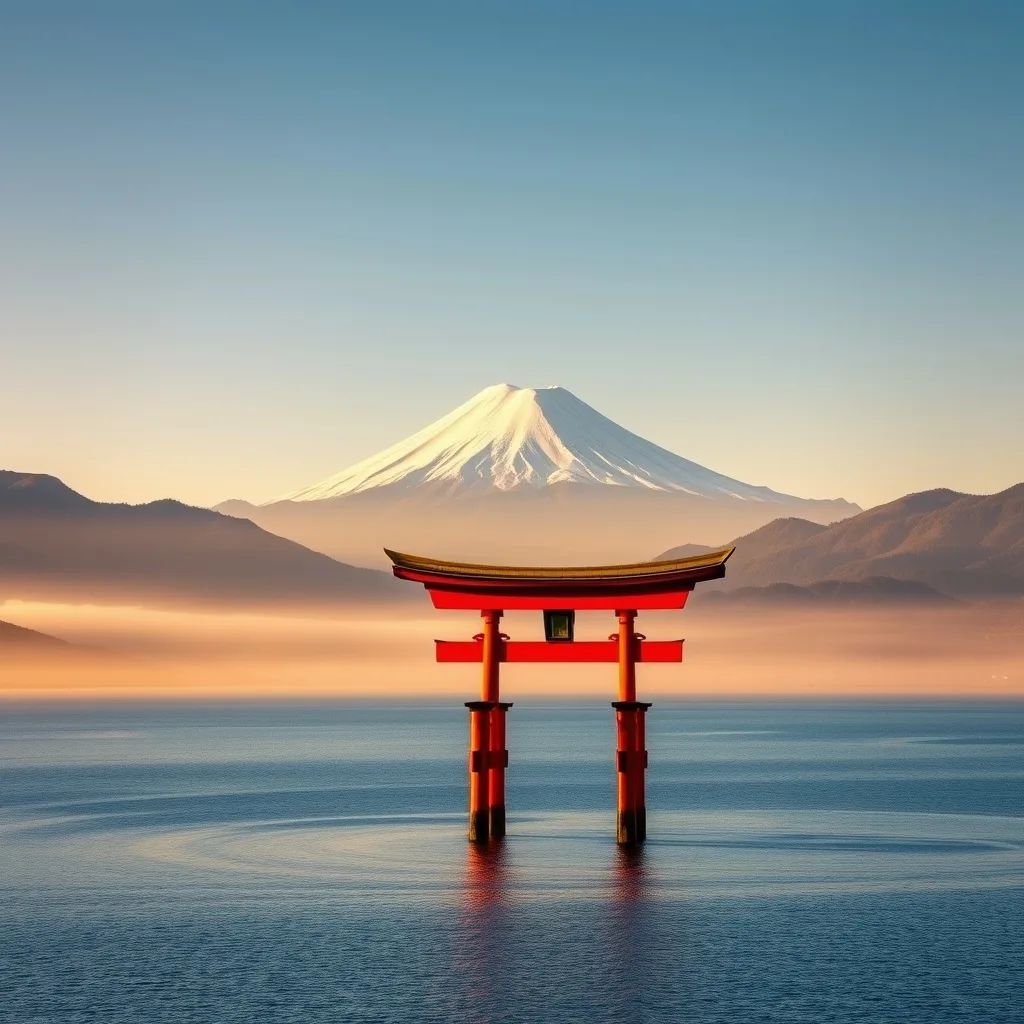
Moto-Hakone village is your lunch stop (see the vegetarian section below). Then walk 10 minutes along the shore to Hakone Shrine, hidden up a cedar-lined stair, and its "Peace Torii" standing in the lake — the photo you've seen on every Japan feed. Expect a queue for the photo spot; 20–40 minutes is normal by early afternoon. The shrine itself is free and blissfully calmer than its gate.
14:30 — Pick one: Open-Air Museum or the old Tokaido road
The Hakone Open-Air Museum (bus or Tozan train back toward Chokoku-no-Mori; ¥2,000 at the door, ¥1,800 online, elementary/middle-school kids ¥800, open 9:00–17:00 year-round) scatters Rodins, Moores and a Picasso pavilion across a mountainside sculpture park, with a hot-spring foot bath in the middle. The single best two hours in Hakone if the weather turns.
Or walk a stretch of the old Tokaido highway — the Edo-era cedar avenue along the lake near Moto-Hakone is free, flat and takes 20 minutes.
16:30 — Bus back to Hakone-Yumoto, then home
The Tozan bus runs Moto-Hakone → Hakone-Yumoto in about 35–40 minutes (~¥1,210 without the pass; included with it). If your legs have anything left, Hakone-Yumoto's day-use onsen let you soak before the ride home. Romancecar back around 18:30–19:00, Shinjuku by about 20:30.
Will You Actually See Mount Fuji? An Honest Answer
Maybe — and you should plan the day so it's great even if you don't. Fuji is notoriously shy: it's clearest on crisp winter mornings (November–February) and hides behind haze and cloud through much of the summer, especially after noon. If the mountain matters to you, go early in the day, early in your trip (so you can retry), and in the cooler months. If you're travelling in July–August, treat any Fuji sighting as a bonus, not the plan — the loop's volcanic valley, lake and museums carry the day on their own.
Two operational caveats first-timers don't expect:
The ropeway suspends without much notice — for high winds, and for volcanic gas levels over Owakudani (this is a live volcanic zone; that's the attraction). Substitute buses bridge the gap, so the loop still works, but check the live status on Odakyu's official Hakone site the morning you go.
Sections close for annual maintenance, typically announced well ahead on the same site — worth a glance when you fix your dates.
If You Stay the Night: The Ryokan Question
An onsen ryokan night in Hakone runs roughly ¥15,000–¥40,000 (₹9,000–₹24,000) per person with kaiseki dinner and breakfast at the mid-range, climbing steeply for the famous names, and dropping to about ¥4,000–6,000 (₹2,400–3,600) for hostel-style stays with shared onsen baths. All figures approximate and seasonal — book early for autumn weekends.
Three things Indian travellers should know before booking:
Request vegetarian kaiseki at booking time, not at check-in. Good ryokan will do a genuinely elaborate veg dinner with notice; almost none can improvise one on the night.
Private baths solve the shyness problem. If a shared public bath isn't your thing (or you have tattoos), book a room with a private open-air bath or a ryokan offering kashikiri (reservable family baths) — our 14-day family itinerary uses exactly this trick for its Hakone night.
Your 2-day Freepass already covers day two. Do the ropeway-and-lake loop on day one, sleep in Gora or Hakone-Yumoto, and spend the next morning at the Open-Air Museum before rolling onward.
Where Hakone Fits Your Japan Route from India
Tokyo-only trip (5–6 days): make Hakone your one day out of the city. It slots neatly after a couple of Tokyo days — for instance as the escape day following a plan like this 3-day Tokyo itinerary you can copy into your own trip.
Tokyo + Kyoto/Osaka trip (8–14 days): don't backtrack — do Hakone en route. Check out of Tokyo, Shinkansen to Odawara, run the loop, sleep in a ryokan, and continue to Kyoto from Odawara next morning (about 2 hours 20 minutes by Hikari). This is the exact night-allocation argument our 10-day Japan itinerary for first-timers makes — the Hakone overnight replaces a Mount Fuji day trip and costs your route zero extra direction changes.
Tip: If you're doing Hakone between Tokyo and Kyoto, send your big suitcase ahead by luggage forwarding (~¥2,300–2,500 a bag) and carry an overnight backpack. The Tozan train and ropeway with a 25-kg spinner is nobody's idea of a holiday.
Eating Vegetarian on the Loop
Hakone is doable veg with a little planning — the trap is assuming every soba shop is safe (the dipping sauce is almost always bonito-fish stock; the same dashi problem we map out in our vegetarian guide to Tokyo applies here).
Amazake-chaya, a 400-year-old thatched tea house on the old Tokaido road, serves amazake — a sweet, thick, non-alcoholic fermented-rice drink — and grilled mochi. About as atmospheric as a veg-friendly snack stop gets.
Moto-Hakone's lakeside bakery-cafés are the reliable veg lunch: pick the plain and vegetable breads, confirm fillings, and take a window seat over the water.
Stock a conbini backup in Shinjuku or Hakone-Yumoto — onigiri (check fillings), inari sushi, fruit and snacks. Options above Gora are thin and queue-prone.
FAQ
Is Hakone worth visiting if Mount Fuji stays hidden? Yes. The volcanic valley, the ropeway, the lake crossing and the Open-Air Museum are the day's substance; Fuji is the garnish. If your only goal is seeing Fuji up close, the Kawaguchiko area is the more direct (but less varied) choice.
Can I use the JR Pass for Hakone? Only to reach Odawara by Shinkansen (Hikari/Kodama). Everything inside Hakone — the Odakyu line, Tozan railway, cable car, ropeway, cruise, buses — is non-JR, which is why the Odawara-version Freepass (¥6,000) exists.
Do I need to book the Romancecar in advance? All Romancecar seats are reserved. Weekday mornings you can usually buy on the spot; for weekends and autumn-foliage season, book a few days ahead online or at Shinjuku's Odakyu counter.
Is the Freepass worth it for just one day? Almost always. One lap of the loop bought ticket by ticket costs about ¥8,400 from Shinjuku against the pass's ¥7,100 — and there's no 1-day pass, so the 2-day is the default even for day-trippers.
Is Hakone doable with kids? Very — the pirate ship and ropeway are the most kid-delighting transport in Japan, the child Freepass is a bargain (¥1,600 from Shinjuku), and the Open-Air Museum has climbable art and a foot bath. Keep the stroller foldable: the Tozan train and buses are compact.
What if the ropeway is suspended when I visit? Buses replace the closed section and the pass covers them, so the loop still runs — you lose the aerial view over the vents, not the day. Check the status page in the morning and flip the loop's direction if only one leg is affected.
Turn the Hakone Day Into a Full Japan Plan
Hakone is one decision inside a bigger route — which cities, how many nights, which passes, what it all costs in ₹. Feed your dates into NextDestination's free planner and build your custom Japan travel itinerary — it drafts the day-by-day route (Hakone included, if you want it), which you can rearrange and export as the dated PDF your visa file and your family both want. For the money picture around it, our Japan trip cost breakdown from India covers what the whole trip runs per person.